FIKA IELTS
Designing and launching an AI speaking coach for IELTS learners
Project Overview
FIKA IELTS is an AI-powered mobile app that helps IELTS learners practise speaking with exam-style prompts, timed responses, structured AI feedback, and retry opportunities. The product launched on iOS and Android and reached real users preparing for the IELTS exam.
My role
As Co-founder & Solo Product Designer, I owned the design side from early product idea to launch-ready mobile experience. I conducted research, translated learner pain points into product flows, designed prototypes and final UI, and collaborated with development to launch the app on App Store and Google Play.

Starting Point
FIKA IELTS started from a personal pain point: while preparing for the IELTS Speaking test, the co-founder struggled to find a reliable practice partner; practice depended on other people's schedules, feedback quality varied, and it was hard to simulate real exam pressure consistently. This inspired a more flexible way for learners to practise anytime, receive structured feedback, and improve with confidence.
While preparing for the IELTS exam, I realized how difficult it was to find the right person to practice with — and that became the starting point for this project.
The Process
Competitor
Analysis
- Existing IELTS apps
- Practice formats
- Opportunity gaps
1st User
Interviews
- 3 participants
- 25–30 mins each
- Band 5.0–6.5
- Mixed profiles
Synthesis
- Key pain points
- Review habits
- User needs
User Flow
- Speaking journey
- Feedback loop
- Retry flow
Low-fi
Prototype
- Core structure
- Key screens
- Early interactions
Usability
Testing
- 6 users tested
- Issues identified
- Improvement areas
High-fi Iteration
& Release
- Refined UI
- Retested prototype
- Launched product
Competitor Analysis
Reviewed leading language-learning and IELTS preparation products in 2023 to understand how they supported speaking practice, the feedback they provided, and whether they addressed the needs of IELTS Speaking candidates.
Duolingo
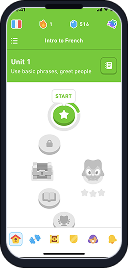
Gamified lessons, streaks and habit-building.
Easy to start and highly engaging.
General language learning; not structured around IELTS Speaking.
ELSA Speak
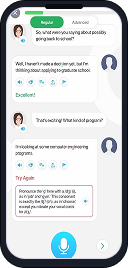
Pronunciation accuracy, word stress and fluency.
Detailed feedback on individual sounds.
Limited support for complete IELTS-style responses.
Praktika
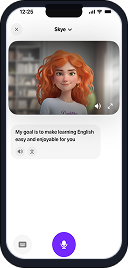
Open-ended AI conversations with virtual tutors.
Natural and independent speaking practice.
Designed for general English, not realistic IELTS practice.
IELTS Apps
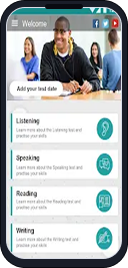
IELTS questions, sample answers and study content.
Test-specific content and structure.
Mostly passive study with limited real-time speaking feedback.
User Interview (1st)
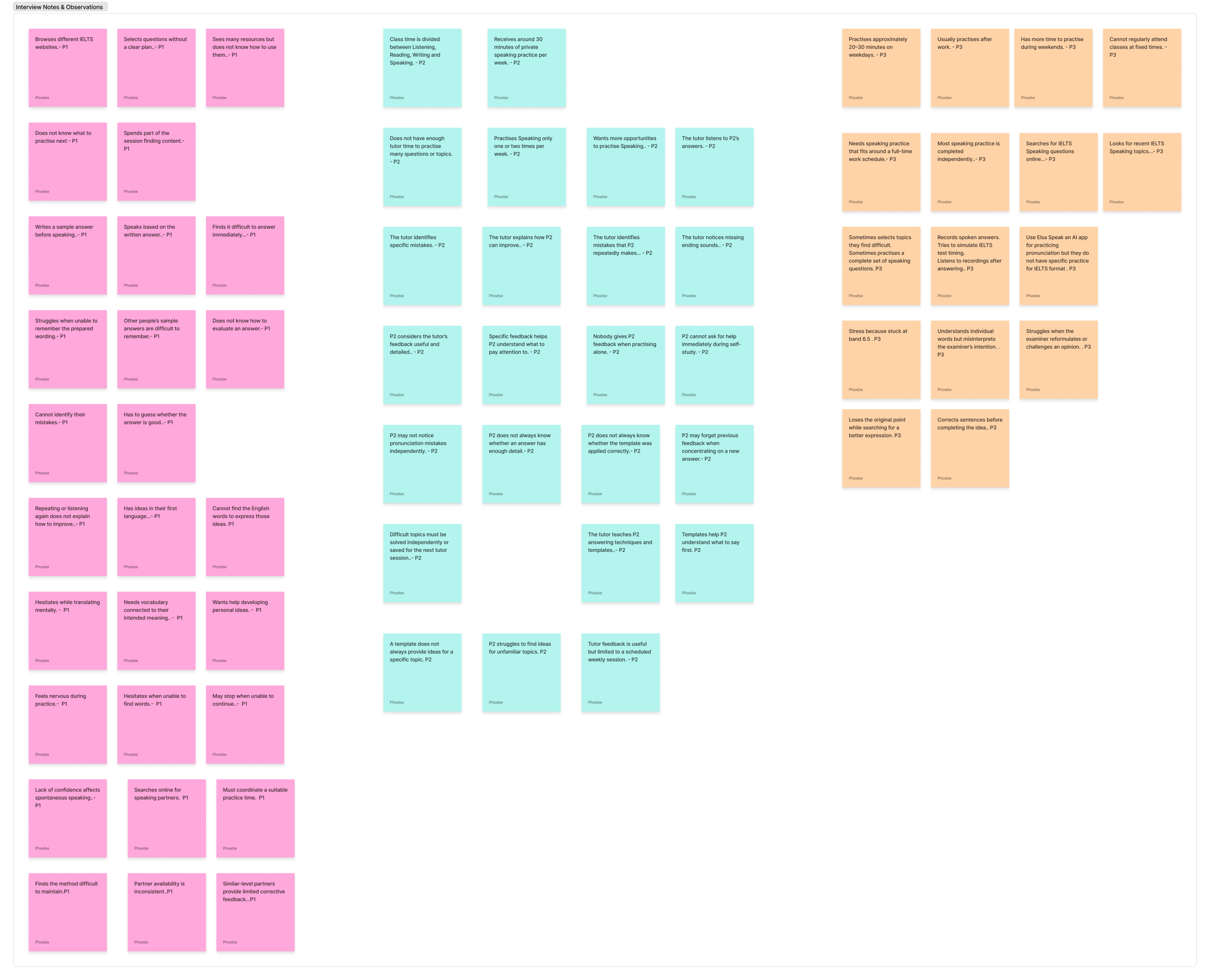
To validate my initial assumptions, I interviewed 3 IELTS learners to understand their current speaking practice habits, the challenges they face, and their expectations for a digital tool. Afterwards, I synthesized the raw notes using an affinity map, which revealed 6 core problems for independent learners.
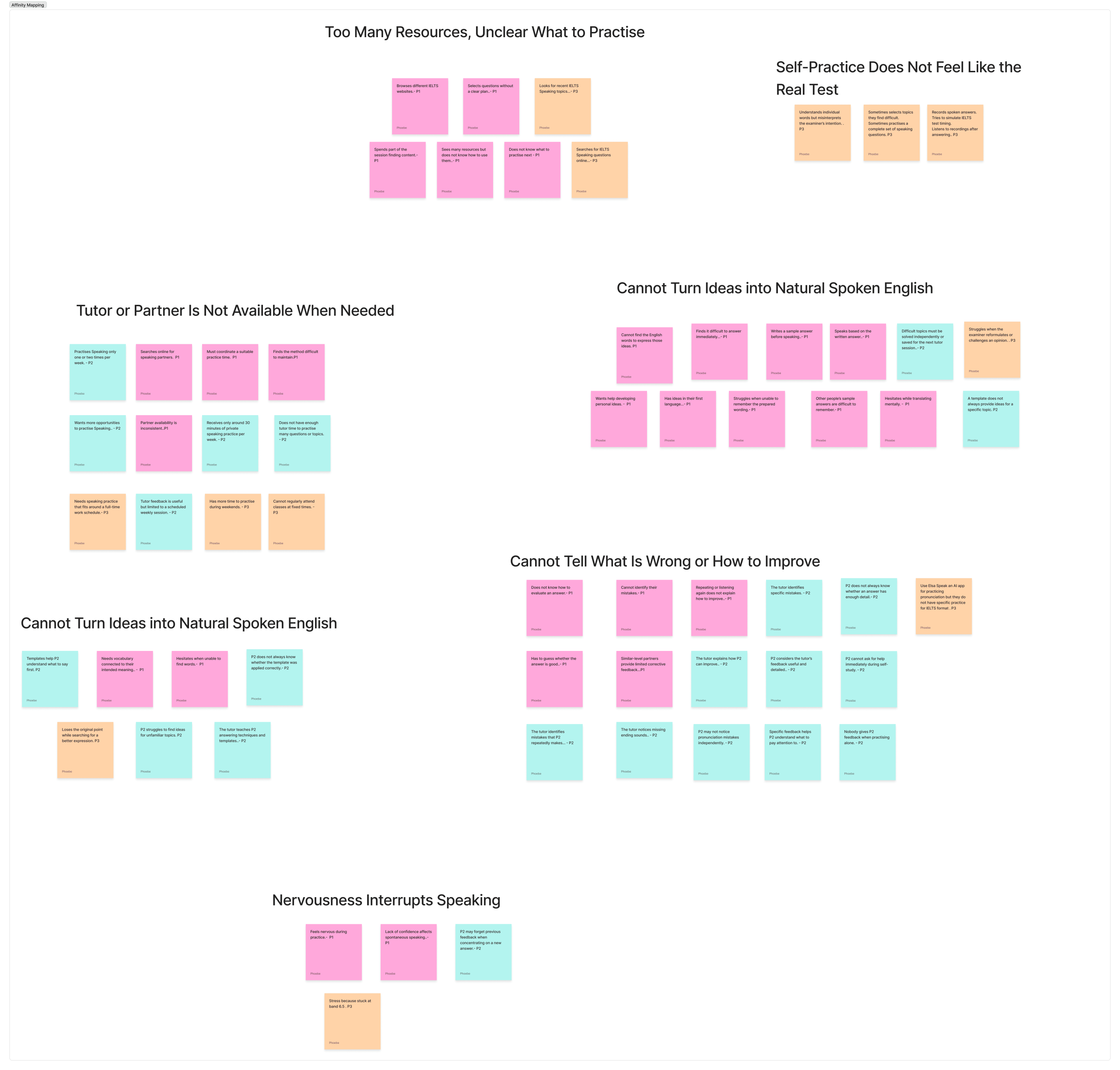
Too Many Resources, Unclear What to Practise
Learners are overwhelmed by the sheer volume of scattered materials online. Without a clear path, they don't know where to start or how to focus their efforts effectively.
Cannot Tell What Is Wrong or How to Improve
When practising alone, learners lack actionable feedback. Without knowing their specific mistakes, they end up repeating errors and feeling stuck at their current band score.
Tutor or Partner Is Not Available When Needed
Relying entirely on human partners or tutors leads to scheduling conflicts. This dependency halts spontaneous study sessions and breaks their consistency.
Cannot Turn Ideas into Natural Spoken English
Even when learners have the vocabulary and grammar rules in their heads, they struggle to formulate sentences naturally and fluently under time pressure.
Self-Practice Does Not Feel Like the Real Test
Practising alone in a comfortable environment lacks the time constraints and pressure of the actual exam, leading to a false sense of readiness.
Nervousness Interrupts Speaking
Test anxiety and lack of confidence cause frequent hesitations, excessive use of filler words, and completely losing their train of thought.
How Might We?
Based on the core problems identified in the research phase, I framed four key questions to transition from problems to opportunities and guide the ideation of the solution.
How might we make IELTS Speaking practice accessible whenever and wherever learners have time?
How might we help learners practise each part of the IELTS Speaking test through a structured and realistic experience?
How might we help learners develop and express their own ideas in natural spoken English without relying on scripted answers?
How might we help learners clearly understand what to improve after each speaking attempt?
MVP Decisions
To deliver value quickly and test our core assumptions, I prioritized features that directly address the most critical user pain points while leaving secondary features for future iterations.
On-demand Speaking Simulation
An AI examiner that conducts realistic, voice-based conversations. Users can practice anywhere without depending on human tutors, engaging in a natural back-and-forth flow rather than just recording audio.
Solves HMW 01Guided Practice Sessions
Structured modules that remove the friction of finding materials. Includes full mock tests and quick practice modes organized into sets, featuring real exam timers and preparation constraints.
Solves HMW 02Natural Phrasing Suggestions
Users can input their raw, incomplete thoughts. Instead of providing generic sample answers, the AI recommends how to structure and express those exact ideas fluently and naturally in spoken English.
Solves HMW 03Evidence-based Feedback and Retry
Actionable feedback synced with audio transcripts. Highlights 2-3 priority improvements based on IELTS criteria, allowing users to immediately retry and compare their new attempt with the previous one.
Solves HMW 04User Flow
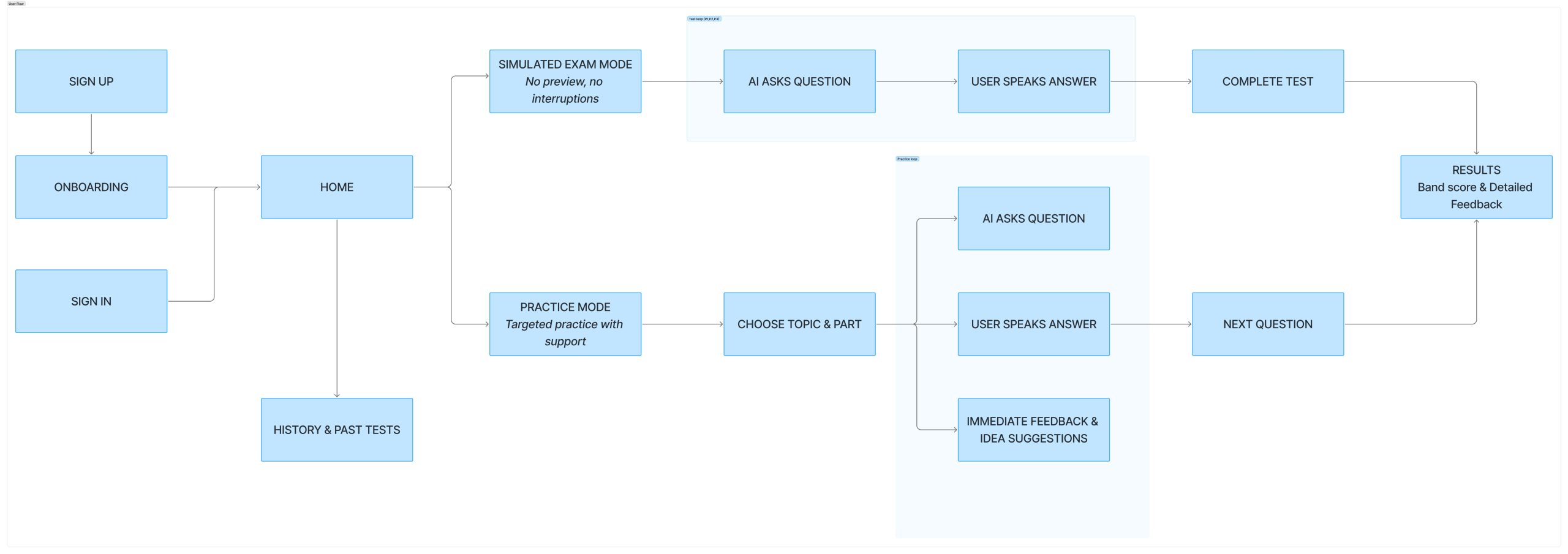
Insights from the competitor analysis and user interviews revealed a gap between realistic test simulation and supportive speaking practice. After translating these findings into HMW questions and prioritising the MVP features, I mapped the core experience into two distinct paths: Simulated Exam Mode and Practice Mode.
Low-Fidelity Prototype
Before committing to visual design, I built a low-fidelity prototype to validate the core user flows. The primary goal was to test the navigation between the Simulated Exam and Practice modes, ensuring the structure was intuitive without the distraction of colors or UI polish.
Play Interactive Prototype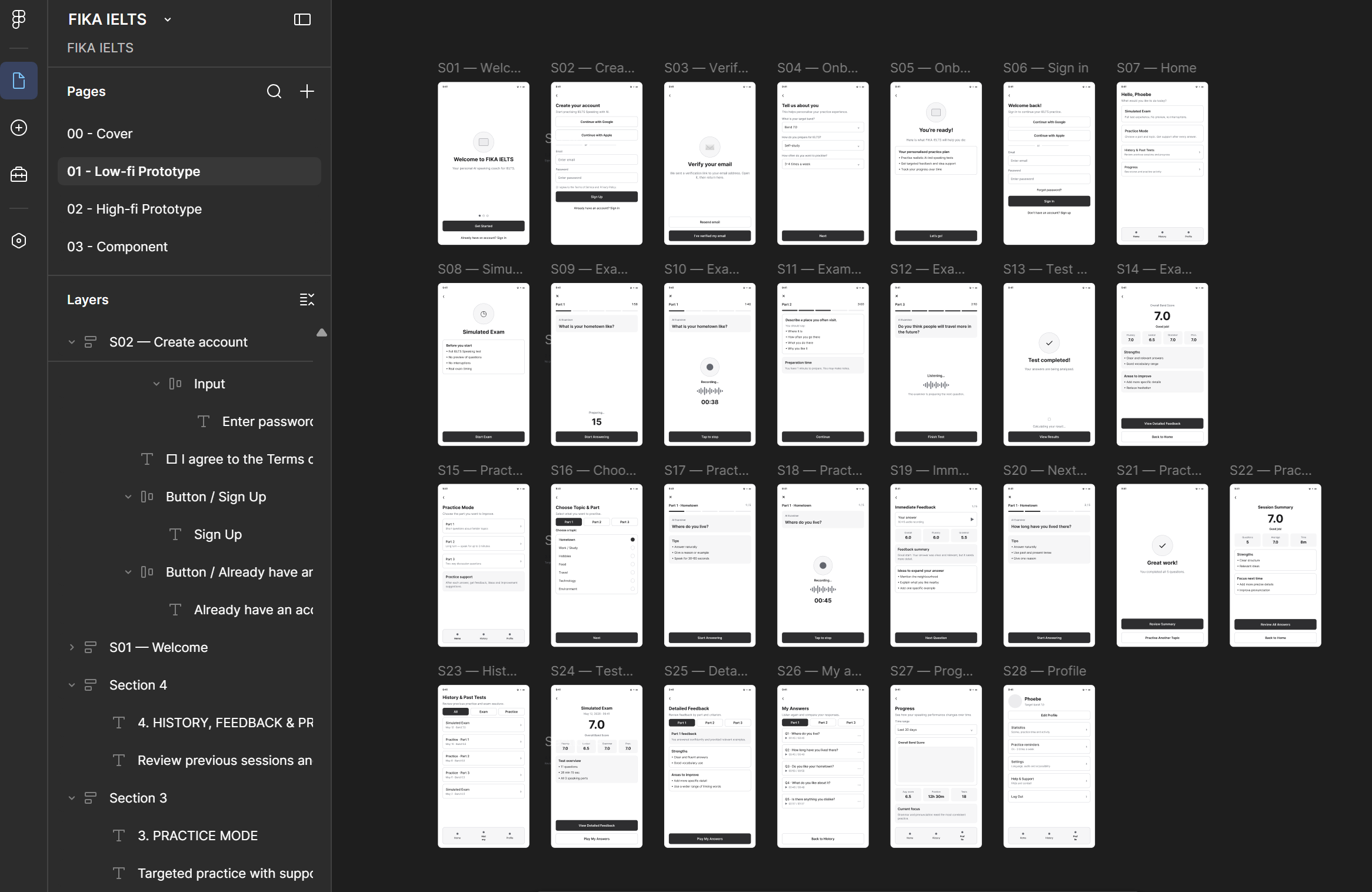
Validating the Prototype
I tested the low-fidelity prototype with six IELTS learners across three core tasks, analysed where they struggled, and translated the findings into three major design changes before developing the high-fidelity prototype.
Keeping Practice and Feedback in One Workspace
What we observed
- 4 of 6 participants attempted to return to the question after viewing feedback. They wanted to compare their response with Ideas, Vocabulary or the Sample Answer before trying again.
- 3 participants expected to retry directly from the feedback view and found the standalone feedback screen disconnected from the rest of the practice process.
Design response
We brought preparation, recording, feedback and retry into one persistent workspace, allowing learners to review supporting content and try again without losing the current question context.
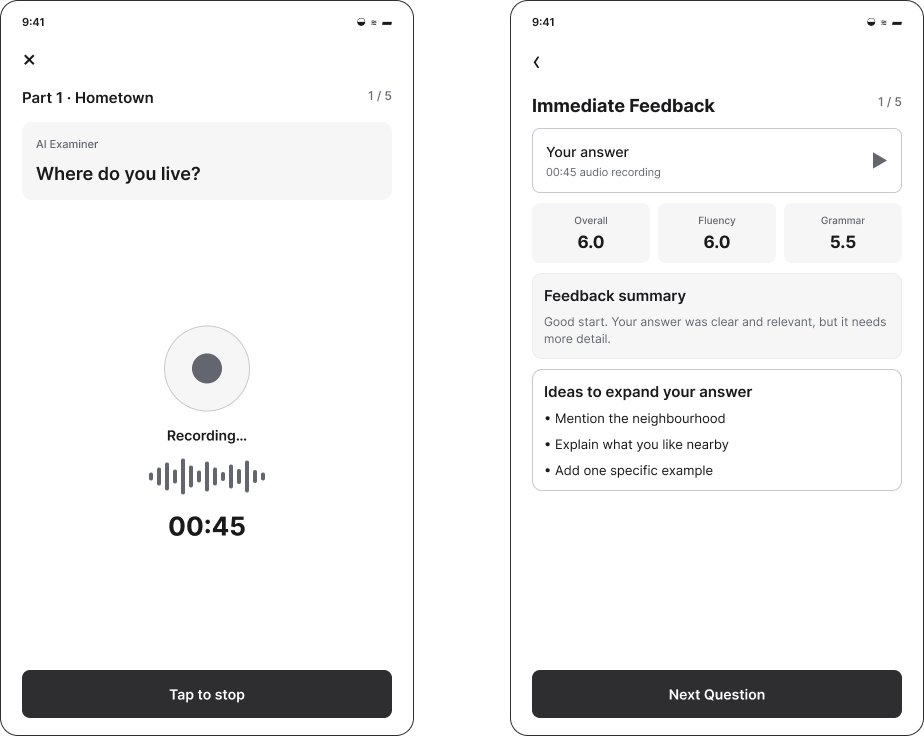
Separate screens
- 1 Feedback opens outside the practice workspace
- 2 Supporting content cannot be referenced directly
- 3 No direct path to retry
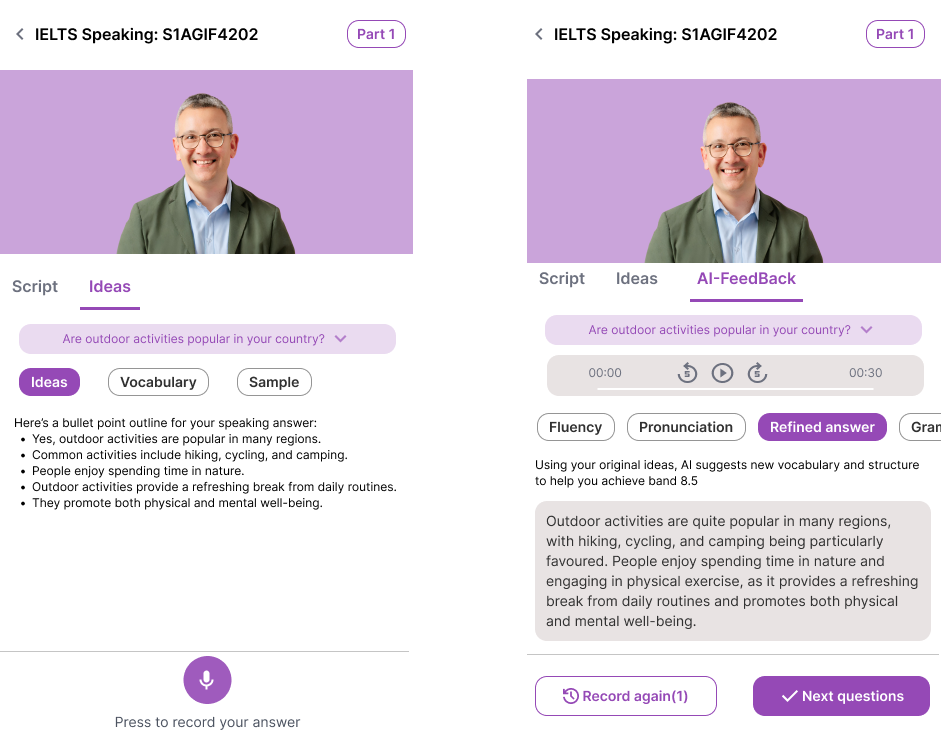
One connected workspace
- 1 Question context remains accessible
- 2 Support and feedback can be compared
- 3 Review and retry happen in place
Making Practice the Primary Entry Point
What we observed
- 5 of 6 participants selected Practice Mode as their first action, but still had to navigate to another screen before seeing available parts and topics.
- 3 participants were unsure what to practise next and expected the first screen to show available or recommended topics.
Design response
We made Practice the default tab and displayed IELTS parts and topics immediately, while moving Exam, History and Account into persistent bottom navigation. This removed an intermediate selection step and aligned the first screen with learners’ most frequent task.
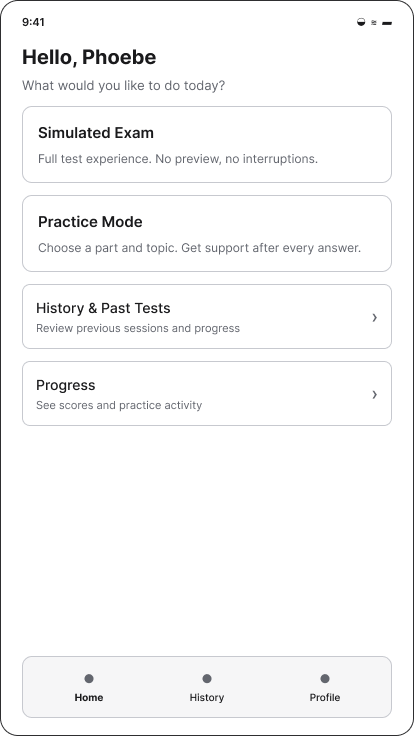
Mode-first navigation
- 1 Unnecessary intermediate steps
- 2 Capabilities over content
- 3 Exam pressure
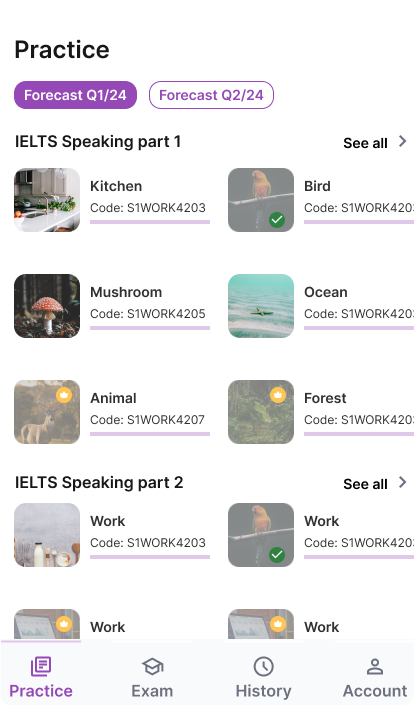
Content-first approach
- 1 Immediate topic access
- 2 Practice as the default
- 3 Reduced redundancy
Connecting the Overall Score to Individual Answers
What we observed
- 4 of 6 participants understood their overall band score but wanted to know which answers contributed to the result.
- Participants wanted to replay individual responses and review specific feedback before deciding what to improve next.
Design response
We expanded the results screen from a static summary into an interactive review hub. The overall band score remains visible at the top, while learners can review individual answers by Part, topic and assessment criterion on the same screen.
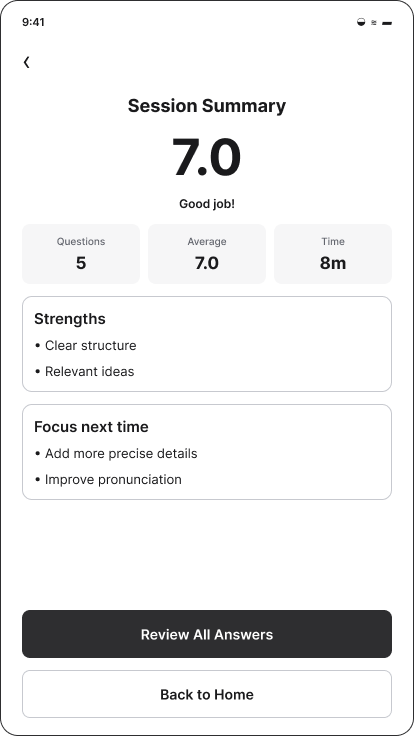
Summary-only results
- 1 Overall result without supporting detail
- 2 Individual answers reviewed in a separate flow
- 3 Limited explanation of what affected the score
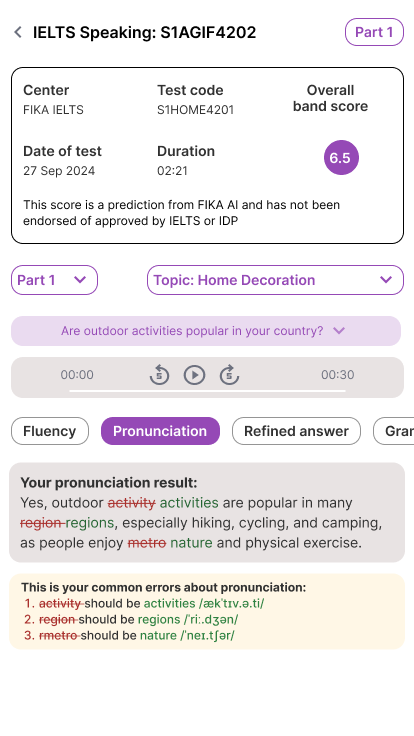
Overview + answer review
- 1 Overall score remains visible
- 2 Review by Part, topic and question
- 3 Replay answers and inspect criterion feedback
High-Fidelity Prototype
The final design system and interactive flows, incorporating all structural pivots from usability testing into a polished, launch-ready experience.
Play Interactive Prototype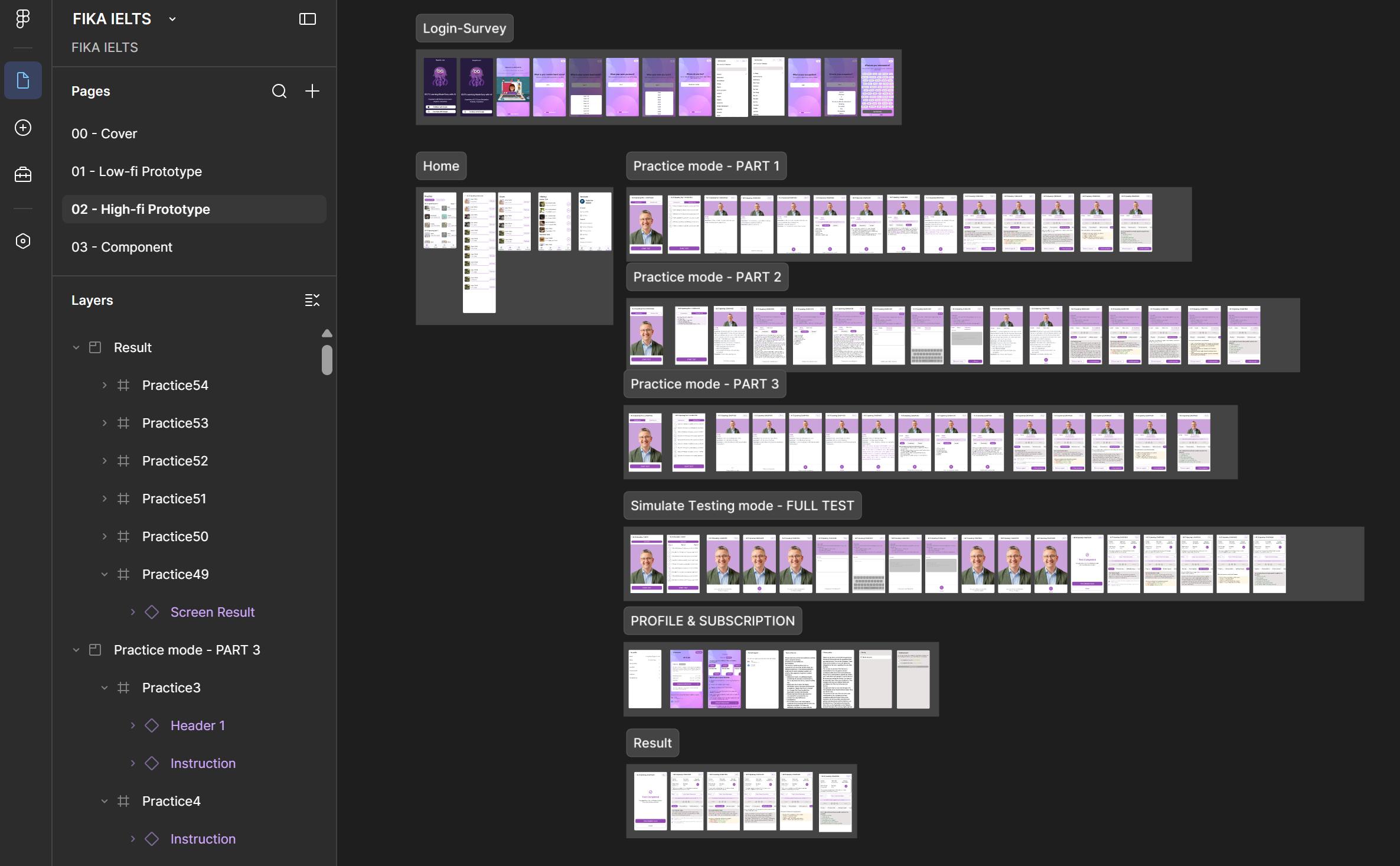
Post Designs Outcome
My Key Takeaways
This project taught me how to design with AI in mind—from crafting prompt workflows to managing user expectations. It also strengthened my ability to balance technical constraints with user needs in a startup environment where speed and clarity are key.
Product Walkthrough
A short process video showing how FIKA evolved from research insights and early prototypes into detailed IELTS Speaking flows, AI feedback states, simulation mode, progress history, and a launched mobile app.