FIKA IELTS
Building and scaling an AI speaking coach for IELTS learners from 0 to 1
Project Overview
FIKA IELTS is an AI-powered mobile app that helps IELTS learners practise speaking with exam-style prompts, timed responses, structured AI feedback, and retry opportunities. I drove the product vision from finding a market gap to successfully launching on iOS and Android.
My role
As Co-founder & Product Manager, I owned the end-to-end product lifecycle. I validated the market opportunity, defined the MVP scope, prioritized features, collaborated with developers to manage technical trade-offs (like AI API latency), and executed the Go-to-Market strategy to acquire our first users.

Product Walkthrough
A short process video showing how FIKA evolved from research insights and early prototypes into detailed IELTS Speaking flows, AI feedback states, simulation mode, progress history, and a launched mobile app.
Finding the Gap
FIKA IELTS started from a clear market inefficiency. Preparing for the IELTS Speaking test requires a reliable practice partner and high-quality feedback. Hiring native tutors is expensive, and self-practice lacks the necessary evaluation to improve. The emergence of Generative AI (LLMs) and advanced Speech-to-Text models presented a unique opportunity to build a scalable, affordable, and on-demand AI examiner that could evaluate candidates based on the actual IELTS grading criteria (Fluency, Vocabulary, Grammar, Pronunciation).
The goal wasn't just to build another AI chatbot, but to create an exam simulator that could apply academic rubrics and provide actionable feedback in real-time.
Product Lifecycle
Discovery
- Market Research
- Competitor Gap Analysis
Definition
- MVP Scoping
- Feature Prioritization
Execution
- Agile Sprints
- Tech Trade-offs (API Latency)
Go-to-Market
- App Store Optimization
- Beta Launch
Iteration
- User Feedback Loop
- Tracking Retention
Market Gap & User Research
To ensure the product was rooted in real user needs rather than just a founder's hunch, I started by analyzing the competitive landscape. While giants like Duolingo and ELSA Speak dominated general language learning, I identified a specific, underserved niche: IELTS test-takers who lacked a realistic, high-pressure exam simulator with criteria-based feedback.
I validated this gap by interviewing IELTS candidates. The interviews confirmed that their biggest pain point wasn't a lack of vocabulary or grammar knowledge, but the inability to practice under exam conditions and receive actionable, structured feedback without hiring an expensive tutor. This defined our core differentiator.
Duolingo
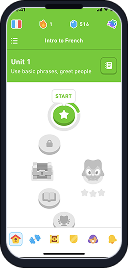
Gamified lessons, streaks and habit-building.
Easy to start and highly engaging.
General language learning; not structured around IELTS Speaking.
ELSA Speak
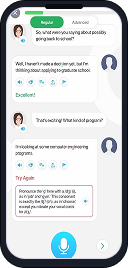
Pronunciation accuracy, word stress and fluency.
Detailed feedback on individual sounds.
Limited support for complete IELTS-style responses.
Praktika
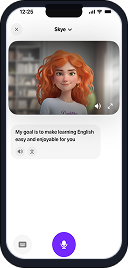
Open-ended AI conversations with virtual tutors.
Natural and independent speaking practice.
Designed for general English, not realistic IELTS practice.
IELTS Apps
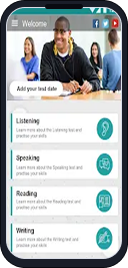
IELTS questions, sample answers and study content.
Test-specific content and structure.
Mostly passive study with limited real-time speaking feedback.
Scoping with RICE & Lean Execution
Initially, my ambition was to build a comprehensive platform covering all 4 IELTS skills (Listening, Speaking, Reading, Writing) coupled with a social networking feature to boost engagement. But as a PM, I knew our budget and timeline wouldn't allow such broad scope.
I applied the RICE framework to evaluate objectively. The results were clear: Reading, Writing, and Social features demanded immense resources (High Effort) but lacked market differentiation (Low Impact). Conversely, the AI Speaking Coach was the touchpoint solving the most acute user pain point, yielding massive Impact. I put aside the "Founder's ego," ruthlessly cut the fluff, and allocated 100% of our focus to this single Core Value for the MVP.
Managing a Part-Time Tech Team
Transitioning into execution, the biggest risk was that our Dev team worked entirely part-time, meaning low velocity and high risk of delays. Instead of burdening the team with heavy tools like Jira, I adopted a Lean Execution strategy.
Visual & Lightweight Tools
I used Miro to visualize the entire User Journey so the team had instant context, and Trello for highly visual, low-friction task tracking.
Strict Sprint Control
We worked in 2-week Sprints with ruthless scope management—absolutely no scope creep or new features were allowed to interrupt the sprint.
Result: Thanks to this brutal prioritization and lean management, the MVP launched successfully on its committed 6-month timeline.
Execution & Technical Trade-offs
Building an AI-native product required balancing ideal user experience with real-world technical constraints, specifically API latency and cost management. As a Product Manager, my role was to define acceptable thresholds and guide engineering efforts.
Solving the Latency Trap
The Challenge: Initially, I used top-tier models (like GPT-4) to play the role of the IELTS examiner. While extremely smart, the 3-4 second response delay completely broke the immersion of a real-time conversation.
The Solution
- ✓ UI & Prompt Hacks: Implemented streaming responses and prompted the AI to start every response with natural filler words (e.g., "Well...", "Let me see..."). The TTS could speak these fillers immediately while the rest of the sentence generated.
Result: Perceived latency dropped to under 1 second, making the conversation feel as natural as speaking to a human.
Tiered Models for Cost Margin
The Challenge: Using heavy models for every single interaction ate severely into our profit margins, making the product difficult to scale sustainably for budget-conscious students.
The Solution
- ✓ Model Routing: I designed a "Tiered Models" architecture. We routed the simple, static grammar checks to faster, cheaper models (like GPT-3.5 or Claude Haiku), reserving the expensive models strictly for the nuanced roleplay and final scoring rubric.
Result: Slashed our API token costs by 40% per user session without compromising the quality of the core simulation.
Launch Strategy
Because we were a small team with a $0 marketing budget, our go-to-market strategy heavily relied on App Store Optimization (ASO) and community-led growth.
- 1. Community Beta: Launched a closed beta via Facebook IELTS groups, gathering feedback from 200 highly engaged users to squash bugs before the public launch.
- 2. ASO Strategy: Optimized keywords around long-tail, high-intent searches (e.g., "IELTS speaking practice AI", "mock test examiner").
- 3. Freemium Model: Offered 3 free tests to lower the barrier to entry and drive immediate value realization before a paywall.

Outcomes & Key Learnings
Data-Driven Pivot: The Onboarding Trade-off
When the Beta launched, I faced a classic PM dilemma: Day-7 Retention Rate was critically low. Analyzing behavioral data, I realized users weren't dropping off because of bad UI/UX, but because the initial practice topics felt too generic. They lacked context.
I faced a critical trade-off: Keep onboarding short to maximize sign-ups, or add friction to gather data for long-term value? I chose the latter.
- The Pivot: I redesigned the onboarding flow, adding a mandatory survey asking for their industry, exact goals, and hobbies. This data was fed into the AI's prompt for personalization.
- The UX Strategy: To mitigate frustration, I turned this into a conversational flow, utilizing micro-copy like "AI is tailoring your path..." to build anticipation.
The Result: While top-of-funnel drop-off increased slightly, the D7 Retention Rate of users who completed onboarding skyrocketed by 35%. Users had a "Wow" moment in their very first session because the AI examiner asked them questions relevant to their real jobs, drastically improving LTV.
The Next Chapter: Shattering the Glass Ceiling
Building FIKA IELTS from scratch with a part-time team and limited resources taught me the ultimate lessons in lean survival, product prioritization, and cross-functional execution. I'm immensely proud of what we achieved.
But I've hit a glass ceiling. With an app in the low thousands of users, A/B testing hypotheses rarely reaches true statistical significance. Moreover, building as a solo Founder can be inherently isolating.
I crave the scale of millions of data points. I want to be a vital link in an elite Product and Engineering squad. I want to debate fiercely with brilliant Tech Leads, have my frameworks challenged daily by a Head of Product, and solve complex user problems at an enterprise scale. That's why I'm transitioning back to a corporate PM role—to elevate my impact and level up where solo execution can't reach.